
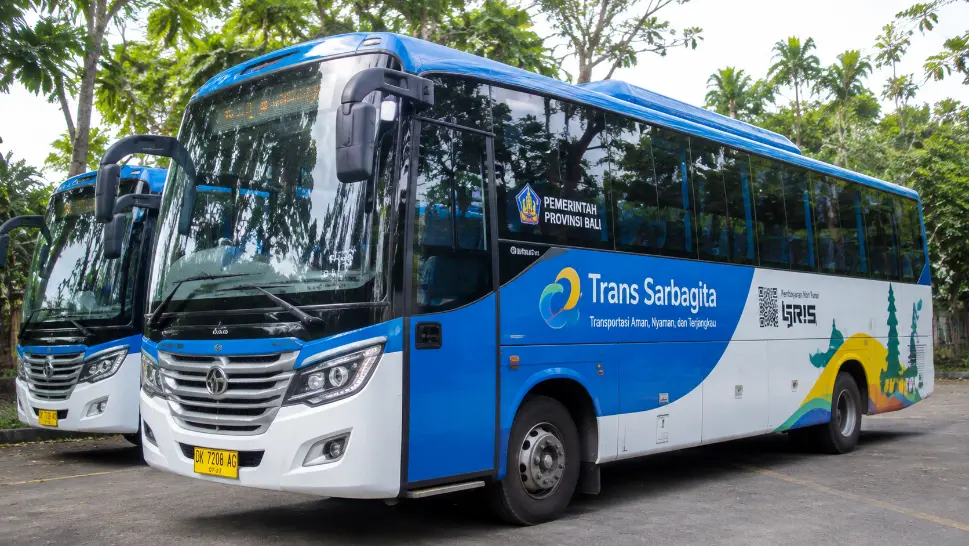
Bali's growing investment in electric public transportation could gradually change how people experience the island, particularly in areas where traffic congestion has become a major concern. With the launch of Trans Sarbagita electric buses in November 2026 and a proposed electric tram connecting Ngurah Rai International Airport to Canggu, the government's transport plans may influence tourism accessibility, neighbourhood development, and future property demand. For property buyers, these developments offer an important reason to look beyond a property's current location and consider how its surrounding infrastructure may evolve over the coming years.
Bali Is Changing How People Move
For years, Bali's popularity as an international tourism destination has brought significant economic opportunities to local communities. However, the growth of tourism has also increased pressure on the island's roads, particularly in areas where visitor activity, hospitality businesses, residential developments, and local transportation share limited infrastructure. In destinations such as Canggu, travelling between popular locations can become increasingly unpredictable, making accessibility an important consideration for both visitors and property owners.
This challenge has encouraged the government to reconsider how transportation should support Bali's future development. Rather than relying entirely on private vehicles and conventional road infrastructure, the introduction of electric public transportation represents a broader effort to create more sustainable mobility options. While the benefits will depend on how effectively these services are implemented, the direction of transport planning could gradually influence which areas become more convenient and attractive to live in, visit, or invest in.
Understanding Bali's Electric Transport Plans

The Launch of Trans Sarbagita Electric Buses
On November 9, 2026, Bali Governor Wayan Koster officially inaugurated the trial operation of Trans Sarbagita electric buses. The service introduces 11 electric buses, with 10 operating daily and one reserved as a backup vehicle. Passengers can use the service free of charge for one year, with operational expenses covered by the provincial government. The initiative forms part of Bali's wider effort to encourage a shift from private vehicles towards environmentally friendly public transportation.
The current service operates along the GOR Ngurah Rai to Garuda Wisnu Kencana corridor, passing through parts of Denpasar, including the Renon area. This route is important because it connects government, educational, residential, and tourism destinations within the southern part of Bali. However, it is important to understand that the current Trans Sarbagita electric bus route does not directly serve Canggu. Its immediate impact should therefore be assessed in relation to the areas it actually connects.
The programme is also supported by the Bali E-Mobility project, which includes six fast charging units and a fleet management system. These facilities are intended to support the operation and monitoring of the electric bus network. Beyond introducing new vehicles, the initiative provides an early indication of how Bali may develop its public transportation infrastructure in the future.
The Proposed Airport to Canggu Electric Tram
Another development could have a more direct connection to Bali's busiest tourism areas. In September 2026, the Bali Provincial Government, Badung Regency Government, and PT Kereta Api Indonesia signed an agreement to develop a battery-powered electric tram connecting Ngurah Rai International Airport with Canggu. The initial corridor is planned to cover approximately 12 kilometres, with a proposed travel time of around 30 minutes. If fully implemented, the service is projected to carry up to 60,000 passengers daily.
The government has targeted groundbreaking in March 2027, with an initial section expected to begin operating in 2028 and the complete corridor targeted for 2029. These dates remain planning targets rather than confirmed operational milestones, as technical studies, further coordination, and public consultation are still required. Nevertheless, the proposal signals that improving transport connectivity in southern Bali is becoming an important part of the island's development agenda.
Why Canggu's Traffic Problem Matters
Canggu has developed from a relatively quiet coastal destination into one of Bali's most active tourism and lifestyle areas. Its popularity has attracted international visitors, digital nomads, hospitality businesses, restaurants, beach clubs, and residential developments. This growth has created economic opportunities, but it has also increased pressure on local roads and supporting infrastructure.
In August 2026, the Badung Transportation Agency held a coordination meeting with the police to discuss traffic congestion in Canggu and surrounding areas. The discussion highlighted increasing mobility among tourists and local residents, as well as the need for continued traffic management and coordination. These concerns demonstrate that congestion is not simply an inconvenience for visitors but also an infrastructure issue affecting the wider local economy.
For property owners, accessibility can influence how attractive a location feels to potential tenants and buyers. A villa may offer beautiful architecture, attractive facilities, and proximity to popular destinations, but difficult road access can affect everyday convenience and the overall guest experience. This becomes particularly relevant for accommodation businesses that depend on reliable airport transfers, staff mobility, deliveries, and guest transportation.
How Better Mobility Could Change Tourism and the Local Environment
Improved public transportation could bring benefits beyond reducing travel time. When visitors have more convenient alternatives to private cars and motorbikes, access to restaurants, beaches, cultural attractions, and accommodation areas may become easier. This could help distribute visitor activity across connected destinations rather than concentrating every journey around private vehicle use.
Electric transportation also introduces an environmental consideration. Electric buses produce no exhaust emissions at the point of use and generally operate more quietly than conventional diesel buses. However, their overall environmental benefits still depend on electricity generation, battery production, infrastructure, and whether enough people actually shift away from private vehicles.
The effectiveness of these initiatives will therefore depend on more than the introduction of electric vehicles. Reliable schedules, convenient stops, pedestrian access, connections to other transport services, and reasonable travel times will all influence whether people choose public transportation. Without these supporting elements, even modern electric buses and trams may struggle to make a meaningful difference to daily mobility.
For tourism destinations such as Canggu, better connectivity could also improve the relationship between visitor growth and the quality of the surrounding environment. Reduced dependence on private vehicles may help ease pressure on local roads, while quieter transportation could contribute to a more comfortable neighbourhood experience. However, these benefits will only materialise if transport improvements are accompanied by appropriate land use planning and infrastructure management.

What This Could Mean for Bali's Property Market
Accessibility Could Become a More Important Property Advantage
Property value is influenced by several factors, including location, surrounding facilities, accessibility, environmental quality, and the potential use of the property. Transport infrastructure can strengthen some of these characteristics by making an area easier to reach and connecting it to a wider network of economic and tourism activities. International property research has found that better public transport accessibility can be associated with higher residential property values, although the effect varies depending on service quality and local market conditions.
For Bali, this suggests that future transport improvements could create additional advantages for properties with convenient access to public transportation. Areas connected to reliable routes may become more attractive to people who value easier movement between the airport, business districts, residential neighbourhoods, and tourism destinations. However, this does not mean that every property located near a proposed transport corridor will automatically experience price appreciation.
The actual benefit will depend on the final route, station locations, service frequency, pedestrian connections, and the property's distance from the transport network. A property that offers convenient access without excessive noise or disruption may have a different market appeal from one situated directly beside a busy transport interchange.
Canggu Could Benefit From Improved Airport Connectivity
The proposed electric tram is particularly interesting for Canggu because the area has a strong relationship with international tourism and short-term accommodation. Easier connections from the airport could potentially make arrivals and departures more convenient for tourists, especially those staying for shorter periods. This may support the attractiveness of accommodation properties that depend on accessibility and a smooth guest journey.
Improved transport could also benefit property owners through more convenient access for management teams, maintenance workers, suppliers, and hospitality employees. These operational factors are sometimes overlooked when buyers evaluate a villa based primarily on its appearance or projected rental income. Over time, properties that combine a desirable location with practical accessibility may have a stronger position in the rental market.
At the same time, improved transportation could encourage further commercial and residential development along connected areas. More convenient access may attract new businesses and accommodation projects, increasing competition among property owners. This means better infrastructure could create opportunities while also making property differentiation and professional management more important.
Infrastructure Development Can Also Bring New Challenges
Transport improvements do not always produce positive effects for every property in the surrounding area. Construction activity may temporarily affect road access, noise levels, parking, and the daily routines of nearby residents. Once operational, busy stops and transport corridors may also introduce additional pedestrian activity, commercial development, and changes to neighbourhood character.
In Bali, these considerations are particularly important because property investment is closely connected to the quality of the surrounding environment. Buyers should consider whether a proposed development respects local communities, existing land use, cultural characteristics, and environmental conditions. A location that becomes easier to reach but loses some of its residential comfort may not appeal equally to every type of buyer or tenant.
What Property Buyers Should Consider Before Investing in Bali
For anyone considering buying property in Bali, transport developments should be treated as one part of a broader investment assessment. Future infrastructure can create opportunities, but purchasing decisions should not depend entirely on announcements or projected completion dates. It is more practical to evaluate what the location offers today while considering how confirmed developments could improve its position in the future.
Several factors deserve particular attention before making a decision.
1. Evaluate Current Accessibility
Check how easily the property can be reached from the airport, major destinations, restaurants, healthcare facilities, and other essential services. Consider travel times during both peak and quieter periods rather than relying exclusively on estimated distances.
2. Verify Proposed Transport Routes
If a property is marketed as being close to future public transportation, request reliable information about the proposed route and planned station locations. Distinguish between officially announced plans, projects undergoing technical studies, and infrastructure that has already been approved and constructed.
3. Assess the Surrounding Environment
Consider road conditions, drainage, noise, pedestrian access, parking availability, and nearby development activity. These factors can influence both residential comfort and the property's suitability for holiday rentals.
4. Review Legal Documents and Land Use
Transport development does not replace the need for proper property due diligence. Buyers should verify ownership or leasehold arrangements, remaining lease terms where applicable, zoning suitability, building approvals, and the permitted use of the property.
5. Evaluate the Property's Actual Rental Potential
Consider who the likely tenants will be and what they value most. A property targeting short-stay tourists may prioritise airport access and proximity to attractions, while a monthly rental property may depend more on everyday facilities, residential comfort, and reliable connections to workplaces.
6. Avoid Paying an Unverified Infrastructure Premium
A proposed transport project may influence market expectations before construction begins. However, a higher asking price does not necessarily represent an increase in the property's actual market value. Buyers should compare similar properties, assess realistic rental income, and consider the possibility of project delays before accepting a price premium based on future infrastructure.
Ultimately, the strongest property decisions are based on a combination of current usability, legal certainty, realistic financial expectations, and the potential for future improvements. Transport infrastructure can strengthen a location, but it should complement the property's existing advantages rather than become the only reason to purchase it.
Making Better Property Decisions as Bali Continues to Develop
Bali's electric transport initiatives represent an important development in how the island approaches mobility, tourism, and sustainable infrastructure. The launch of Trans Sarbagita electric buses provides an early example of the government's commitment to expanding public transportation, while the proposed Airport to Canggu electric tram introduces a longer-term possibility for improving connectivity in southern Bali.
For property buyers, these changes offer a reason to assess locations from a wider perspective. Accessibility, environmental quality, local infrastructure, and future development plans can all influence how a property performs as a residential asset or rental business. Understanding these factors before purchasing can help buyers distinguish between properties with genuine long-term advantages and those relying mainly on optimistic market expectations.
At Dewandaru Property, property decisions are considered beyond the physical characteristics of a building. Its property advisory services bring together considerations around property use, rental potential, hospitality operations, management requirements, and market positioning. For buyers assessing opportunities in Bali, having a clearer understanding of these factors can help establish whether a property is suitable for their intended purpose and long-term plans.
A property should make sense not only for where Bali stands today, but also for how its surrounding environment may evolve tomorrow.
For a closer discussion of property positioning, rental potential, and ownership considerations, visit Dewandaru Property's Services.